OCEAN
ACIDIFICATION (THE OTHER CO2 PROBLEM)
The link above is
a great video to watch for an introduction to acidifying oceans. If this video
doesn't scare you, or at the very least cause some consternation, then I think
you need to check your pulse: are you alive? Acidifying oceans are a real
threat, and possibly more dangerous than the other consequences of a warmer
planet discussed on this site. The topic certainly has seen no shortage of
research, and I intend to give a synopsis of recent literature and the
consequences of an increasingly acidic ocean on this tab. Because CO2
emissions has until recently been associated with global warming, the
acidifying effect on oceans has been referred to as “the other CO2
problem”.
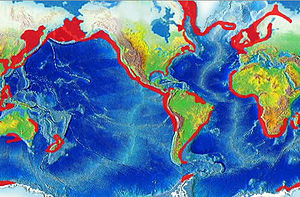
This is a picture showing global distribution of coral reefs. These systems (in red) are all in danger of being wiped out due to acidifying oceans.
Research
The topic of an
acidifying ocean is a relatively new area of research for science. The ocean is
experiencing a drop in pH (lower pH = more acidic) across the globe, due exclusively
to increased CO2 levels. It is important to note that the term ‘acidic’
implies only a shift towards a less alkaline pH (i.e. the oceans aren’t going
to turn into the equivalent battery acid any time soon). However, small shifts in
acidity due to CO2 have a huge impact on ocean life. In fact, the
oceans have absorbed CO2 (and other gasses such as SOx and NOx) virtually since they have
existed. Humans have simply increased the rate at which these harmful gasses
are put into the atmosphere beyond the Earth’s capacity to assimilate them.
These effects will be felt more strongly by coastal ecosystems, particularly
areas that depend on calcification of coral reefs (Abbasi and Abbasi, 2011). A decrease in calcification abilities of all
sorts of biota has been observed, including coral, shellfish, arthropods, and
small creatures like zooplankton. New research is also showing that increased
acidity due to CO2 is associated with ‘bleaching’, which effectively
disrupts the photoprotective mechanisms of an organism’s photosystems (meaning
they essentially get sun burnt!). This has a negative impact on productivity
and ability to grow than on calcification, which can affect reef building
species like Crustose Coralline Algae (see image below). In fact, some scientists predict that these
and other species may be pushed beyond their ability to function whatsoever,
inducing extinction within the next few
decades (Anthony et al. 2008). What is
even more haunting is the fact that the rate of acidification is expected only
to increase given current CO2 emission loads.
So just how much CO2
are we loading into the atmosphere? A 2007 study shows that over the past 2.5
centuries CO2 gas levels have increased by 40% (280 parts per
million in volume to 384 ppmv). This increase is due to the industrial
revolution and the burning of fossil fuels combined with deforestation, causing
a rate of emission of greenhouse gasses not seen in millions of years (Solomon
et al. 2007). Indeed this is a problem.
This is a photo of a coral reef builder, Crustose Coralline Algae. This species is sensititive to acidic conditions, and it is integral to most coral reef systems capacity to expand.
Consequences
This quote pretty much sums it all up:
“Considering that oceans cover almost 70% of the earth's surface, any upset in the balance of forces in the oceans due to anthropogenic CO(2) emissions has, potentially, much more massive consequences than the impacts scientists are witnessing on the rest 30% of the earth”. (Abbasi and Abbasi, 2011)
In essence, Abbasi means to say that although the impacts on terrestrial ecosystems due to global climate change may be great, they pale in comparison to the possible effects of altered oceanic chemistry. These effects have already been documented in the coral reef systems of our planet: organisms have begun seeing a decrease in their ability to calcify and protect themselves from damaging sun rays.
So what does this mean for these aquatic ecosystems? It is basically this: if you take out the framework builders, you can’t build the rest of the community. Specifically, corals have symbiotic relationships with organisms called dinoflagellates and other algae, which help them build the base of reef systems. Acidic conditions alter these relationships, cutting the base out of the ecosystem (Anthony et al. 2008). Beyond coral reef systems we see a decrease in productivity of other shellfish. The mussel (Mytilus edulis) and the Pacific Oyster (Crassostrea gigas) have been seen to show decreases in productivity by 25% and 10%, respectively, when raised in experimental acidic conditions (740 ppmv) (Anthony et al. 2008).

These are a selection of shellfish, mussels, which could lose their ability to form shells if CO2 emissions aren't curbed.
The basic theme of this website, which hopefully you have gained so far, is to show that there are sure to be dire consequences to human life as we know it if CO2 emissions are not curbed. Along with warmer oceans, melting pole regions, and possible shifts in oceanic currents, acidic ocean conditions threaten all corners of the globe. Because so many people depend on the ocean for food and livelihood, changes in productivity of oceans and the ability of ecosystems to function will have negative effects for humanity and life on this planet. Humans came from the ocean, we have survived and flourished because of its bounty, and now we are in danger of forcing it beyond its breaking point. See the next tab for the type of trophic cascades and loss of biota we could encounter if we do nothing to change our emission standards.

No comments:
Post a Comment